
Sex Offender Checks in Coleman County
The Texas Public Sex Offender Registry is the official starting point for a Coleman County sex offender search. Texas DPS manages the statewide database, while each local law enforcement authority handles registration for people who live in its jurisdiction. A person within the City of Coleman generally registers with city police. A person outside a municipality generally registers with the Coleman County Sheriff. Santa Anna residents should confirm the current city registration contact before making an office visit.
The registry is free and can be searched by name or place. Coleman County does not publish a separate sheriff registry, local offender map, or verified registry app. That means a countywide DPS search is broader than checking one city. Keep the spelling, possible aliases, and location details at hand, but do not assume a same-name result identifies the person sought. Open the profile and compare several fields.
Search Coleman County, Not One City
A city-only registry query can miss a relevant profile. Postal addresses, city limits, and registration jurisdictions do not always line up. Search the county field first for the widest Coleman County view, then narrow by address or city when the question concerns a smaller area. The search form also supports a name route for a known spelling.
The DPS search screen shows how the official location and name controls are arranged.
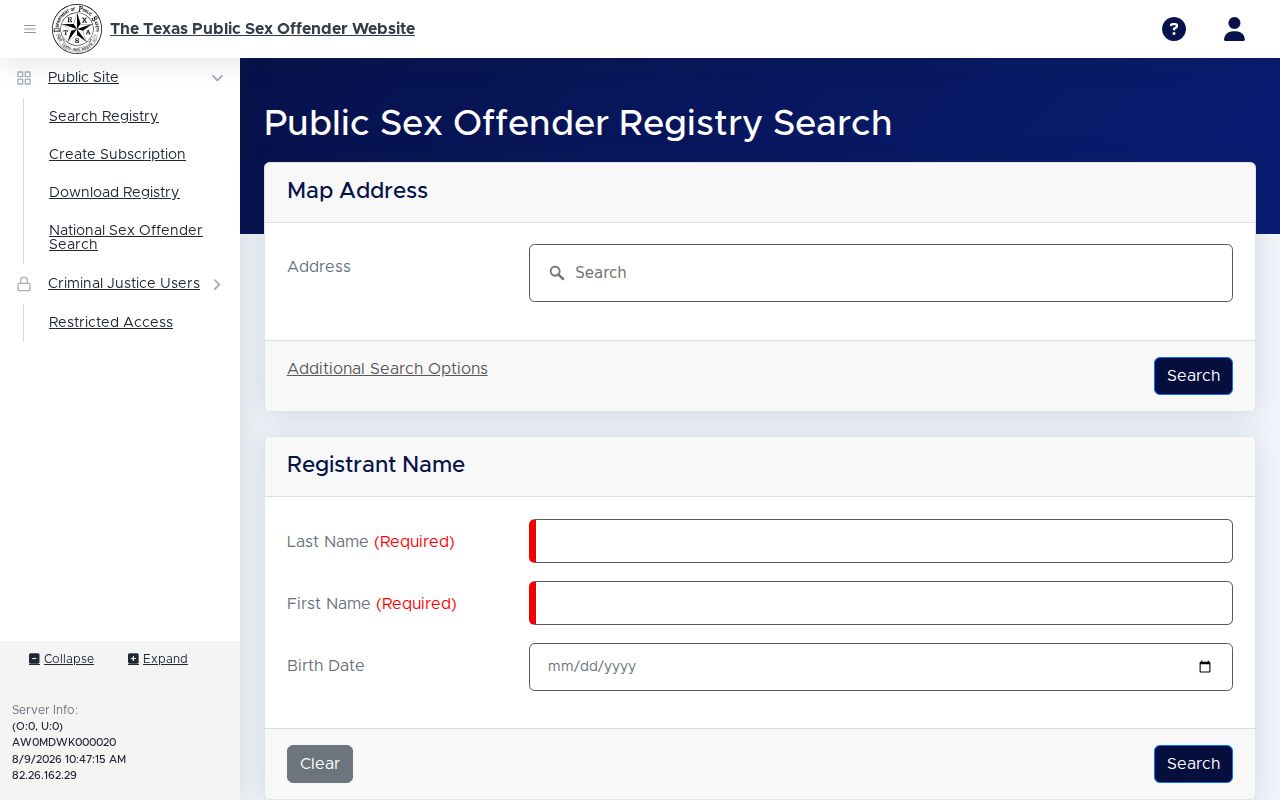
Those controls help readers move from a broad Coleman County result set to a precise address or identity search without relying on a private directory.
How to Search the Texas Public Sex Offender Registry
Use several routes when accuracy matters. A county filter provides breadth, a location search adds nearby results, and a name search tests a known spelling. The current interface may change its dropdown choices, so use the labels that appear live rather than assuming a fixed radius. Review the conditions of use before searching.
- Open the official DPS registry and choose a name or geographic search.
- Enter a last name, or supply a place detail such as county, city, address, or ZIP code.
- Review the result list and map, then compare the available descriptors instead of relying on the name alone.
- Open the complete profile. Read the status, registering agency, verification details, address, and reportable-offense fields together.
| Field Label | Type | Required | Notes |
|---|---|---|---|
| Search type | Tab or control | Yes | Choose name or geographic search. |
| Last name | Text | Conditional | Used for a name search; test spelling and aliases. |
| First name | Text | Optional or conditional | Narrows a name result. |
| Address and city | Text or selection | Conditional | Used for a location search. |
| County | Dropdown | Optional or conditional | Select Coleman for countywide results. |
| ZIP code and radius | Text and dropdown | Conditional | Use the choices shown in the live portal. |
Coleman Registry Agency Boundaries
The registering agency listed on a profile is more useful than a mailing-city label when a Coleman County registry entry seems wrong. City residents generally work with their police department, while people in the unincorporated county register through the sheriff. Call the Coleman County Law Enforcement Center at 325-625-3506 or use the Coleman Police contact at 325-625-4114 to confirm the correct appointment site. Santa Anna residents should verify the current authority through the official city site. The research did not verify an app or county-specific alert program.
The Texas DPS registration program overview explains the statewide role behind local registration work.
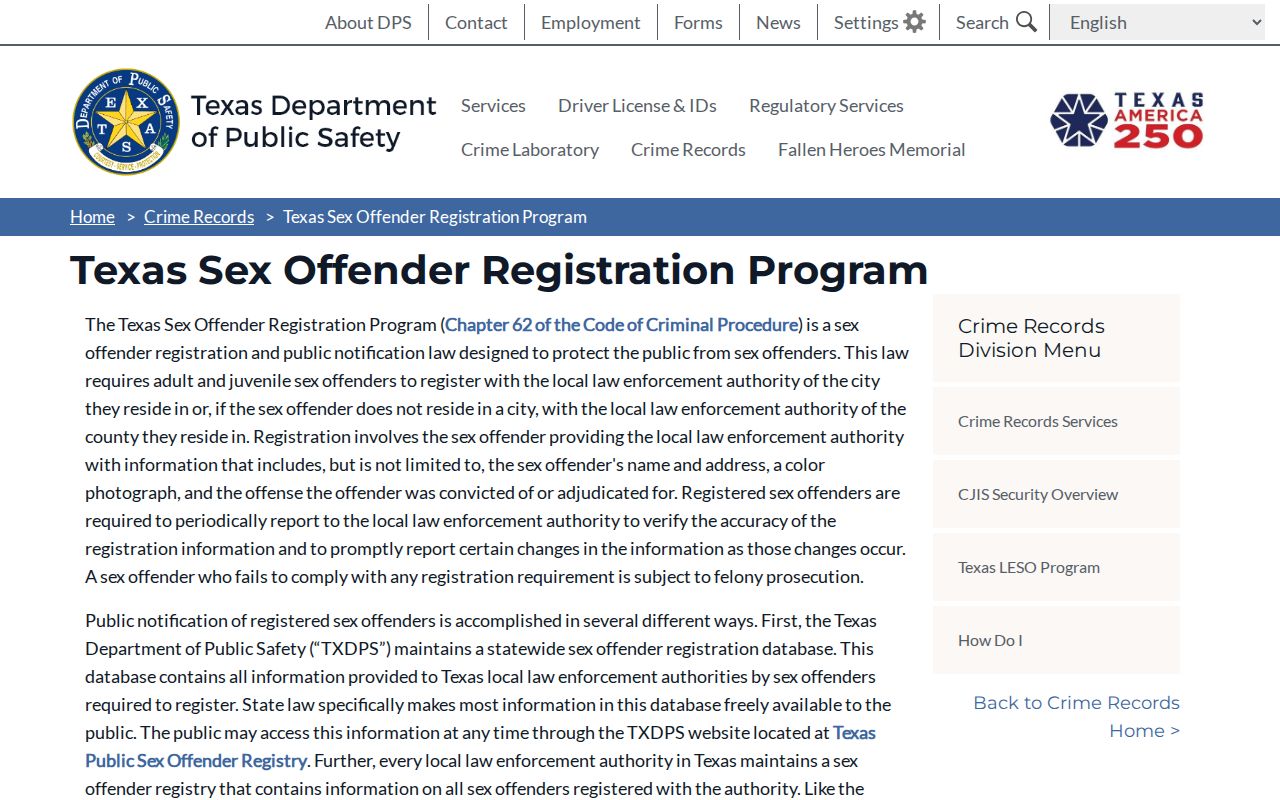
This division of work explains why DPS runs the public search while Coleman County law enforcement verifies and receives local registration information.
Inside a Registry Profile
An official profile combines identity, location, offense, and compliance fields. It is a registration record, not a full criminal history or a substitute for the judgment in the underlying court case. Texas DPS may display a current photograph, aliases, physical descriptors, a reported residential location, public work or school information, vehicle data, and scars, marks, or tattoos when authorized.
The Texas registry profile interface illustrates the official field layout without requiring a private people-search service.
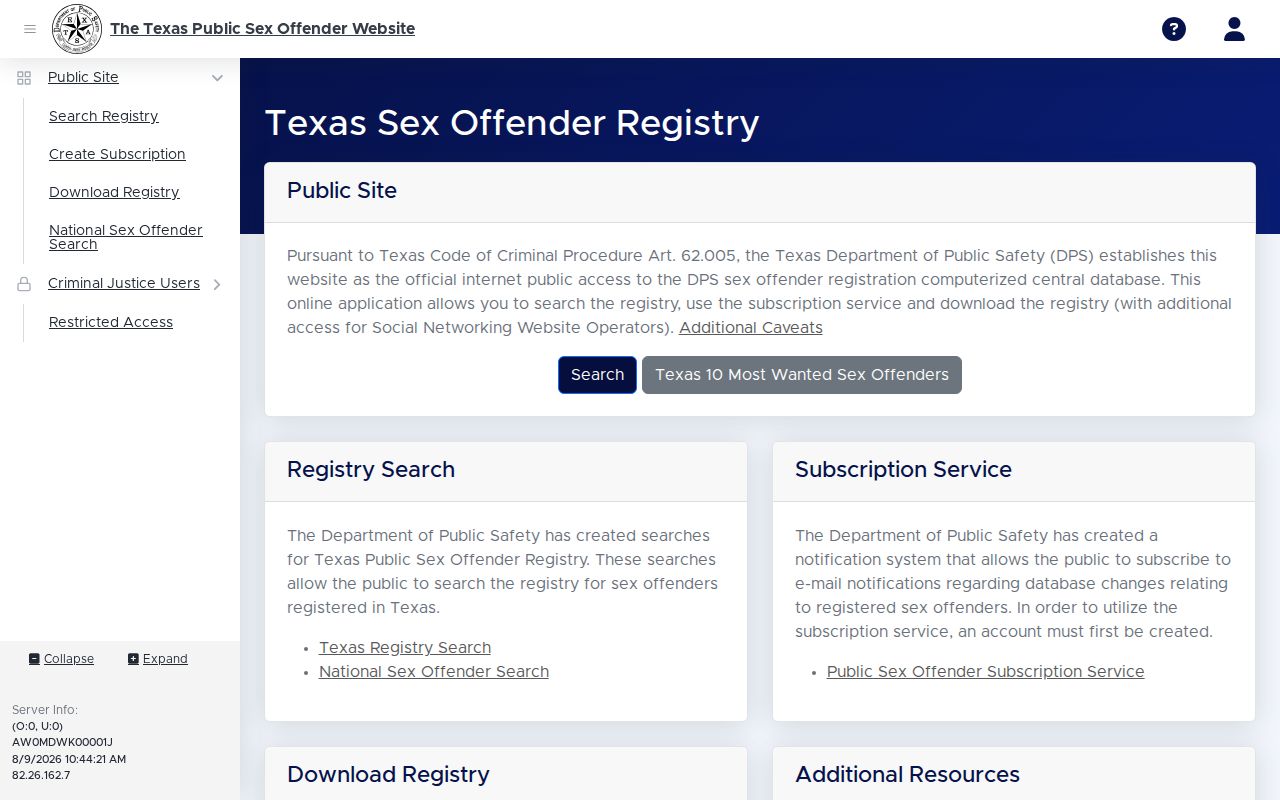
A careful Coleman County check treats the verification date and registering agency as part of the record, not as fine print.
| Name and aliases | Reported identity names plus the DPS or state identifier. |
|---|---|
| Photo and descriptors | Current public image, age or birth detail, height, weight, hair, eyes, and other physical marks as released. |
| Registered location | Address or reported location, plus public work or school information when authorized. |
| Offense information | Reportable offense, statute or jurisdiction, disposition date, and registration basis. |
| Risk information | Texas risk level when assigned; this is not the same as a federal SORNA tier. |
| Status and agency | Compliance or absconded status, verification detail, and the local agency responsible for the registration. |
Read Coleman Registry Verification
An address pin cannot prove where a person is at a given moment. It reflects information reported through the registration system and may change after a move, verification, custody event, or agency update. Check the profile date and compliance field. Then note whether Coleman Police, the sheriff, Santa Anna law enforcement, or another agency is listed as the registrant's authority.
If a Coleman County address appears stale, do not confront the person or neighbors. Report the concern to the named registering agency. For a county-jurisdiction profile, contact the sheriff. For a Coleman city profile, contact police. Suspected noncompliance can also be routed to the DPS Sex Offender Registration line at 512-424-2800. Immediate danger belongs with 911.
Note: Registry status can change after the search, so save the date and verify urgent concerns with the agency shown on the profile.
Texas Registration Levels and Requirements
Texas Chapter 62 does not use a simple public Tier I, II, and III duration chart as the controlling rule. The reportable offense, type of proceeding, judgment date, age, and release or discharge event can all matter. Texas also uses risk-level assessments for community notification. A risk label and a criminal offense degree answer different questions.
| Texas concept | Duration or effect | How to verify |
|---|---|---|
| Assigned risk level | May affect community notification; it does not set every registration term by itself. | Read the DPS profile and the underlying assessment rules. |
| Lifetime duty | Applies to offense categories identified in Chapter 62. | Match the exact offense and statutory subsection. |
| Ten-year duty | Runs after the later statutory release or discharge event for specified cases. | Confirm the offense and discharge date with DPS or registration staff. |
| Juvenile duty | Often continues to a tenth anniversary measured from a later release, discharge, or dismissal event, subject to relief. | Use current DPS guidance and any court order. |
Texas first adopted its registration law in 1991. DPS explains that a 1997 change reached certain reportable cases dating to 1970 when the person remained in the Texas criminal justice system for that offense on or after the statutory date. This history is another reason not to calculate an end date from a short profile summary.
The start point also matters. A ten-year duty may run from release from confinement, discharge from community supervision, or another event specified by Chapter 62, rather than the conviction date printed near the offense. Juvenile cases have their own timing and possible court relief. For a Coleman County profile, use the exact judgment and discharge records before asking DPS or local registration staff about duration. A simplified web table cannot resolve those facts.
NSOPW and Coleman Registry Results
The U.S. Department of Justice National Sex Offender Public Website adds a cross-state search. It is useful when the known location crosses state lines or when a person recently moved, but it gathers results from participating jurisdictions and sends readers back to the contributing registry for detail.
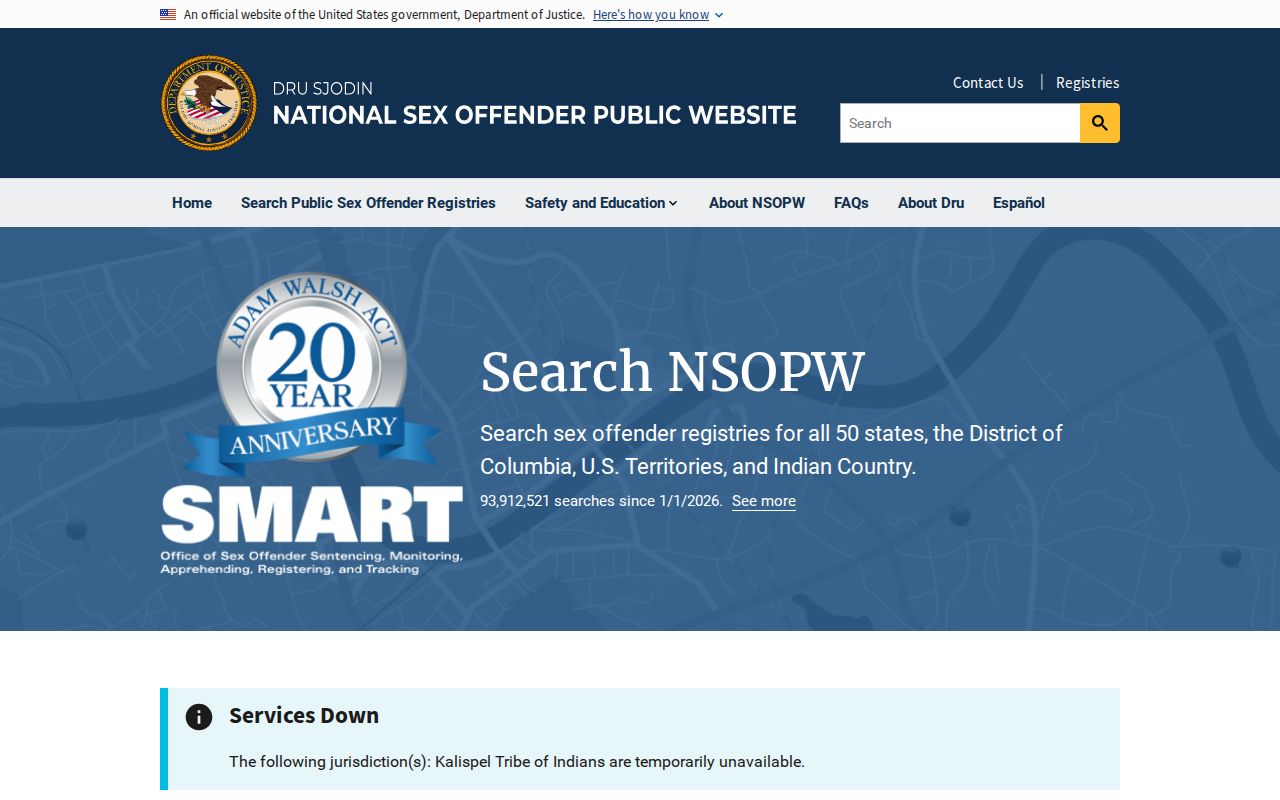
For a Coleman County result, the Texas DPS profile remains the primary state record, and the listed local agency remains the best source for a suspected location or compliance error.
Coleman Registry Maps Have Limits
A registry map supports neighborhood awareness, but it cannot establish that an address is current beyond the profile's verification details. Nor can a map state the exact residence restriction that applies to one person. Texas has no single blanket distance rule that can safely be applied to every registrant. A court order, parole condition, community-supervision term, or municipal rule may impose a specific child-safety zone.
No official Coleman County-wide residency ordinance was located in the research. Verify a person's actual restriction through the court or supervising authority. Do not infer a violation merely because a marker seems close to a park, school, or other place on an online map.
Community Notification and Lawful Use
The Coleman County registry search exists for public awareness and safety planning. Use it to understand official registration facts, verify the responsible agency, and make a calm report when the profile appears outdated. A result is not permission to follow, threaten, shame, or confront anyone. General Texas criminal laws governing threats, stalking, harassment, assault, and property damage still apply.
Community notification depends on Texas law, assigned risk information, and the local authority. The registry does not authorize private punishment. When facts appear inconsistent, save the profile link and contact the listed agency or DPS instead of spreading an unverified claim.
Registration information is also separate from the complete court case. The 42nd District Clerk holds Coleman County felony judgments, while another Texas court may hold the underlying case for a person who later moved here. The registering agency can address current registration facts, but only the proper court clerk can certify the conviction, sentence, or later order. Keeping those custodians separate avoids treating a public registry profile as a complete case file.
Use registry data lawfully: Texas Code of Criminal Procedure Chapter 62 supports public notice, but threats, stalking, harassment, vigilantism, and other criminal misuse can be prosecuted under Texas law.