
Coleman County Criminal Court Cases
Coleman County criminal court cases do not all go to one clerk. The 42nd District Court hears felonies, and the District Clerk keeps its indictments, motions, dockets, judgments, and sentencing orders. The constitutional County Court hears Class A and B misdemeanors and appeals from Justice Court. Its case files are held by the County Clerk. Class C cases filed by the Sheriff, Texas DPS, or game wardens can stay in the countywide Justice Court. Fine-only city charges may remain in Coleman Municipal Court.
The clerk is the public file custodian, while the prosecutor builds and tries the case. The 35th Judicial District Attorney handles felony prosecution, and the County Attorney handles County Court misdemeanors. Discovery from a prosecutor is not the same product as a public clerk copy. Start with the charge level and filing court, then request the cause number, docket sheet, charging paper, disposition, and sentence from that court's clerk.
Coleman Court Split by Charge Level
The court split is the fastest way to avoid a failed search. A felony arrest may begin with county magistration, but the filed prosecution belongs in District Court. A Class A or B misdemeanor goes to County Court. Class C jurisdiction depends on who filed the charge and whether it arose under city authority. The Coleman County Clerk page shows the misdemeanor records counter and public-search route.

The clerk image points to the office that holds Class A and B misdemeanor filings, not felony case files or city citations.
| Charge route | Court and custodian | Useful request |
|---|---|---|
| Felony | 42nd District Court and District Clerk | Indictment, docket, judgment, sentence |
| Class A or B misdemeanor | Coleman County Court and County Clerk | Information, docket, plea, judgment |
| Sheriff, DPS, or game-warden Class C | Coleman County Justice Court | Citation, setting, judgment, warrant status |
| Coleman city fine-only case | Coleman Municipal Court | Citation, docket setting, disposition |
For county Class C files, call Justice Court at 325-625-4223 or email justice@co.coleman.tx.us. For Coleman city Class C files, call Municipal Court at 325-625-4116 or email court@cityofcolemantx.gov.
Searching Coleman County Case Records
The county links Texas Online Records as its online starting point. Select Coleman County and the available court or record category. A known cause number is the strongest key. A name and date range may help when the number is unknown, but portal coverage is not a promise that every old, sealed, unscanned, or recent Coleman County criminal case will appear. Use these five steps to pair the index with the actual custodian.
- Identify the charge level and likely filing court before searching.
- Select Coleman County and the relevant court or records category.
- Use the cause number when known, or try the party name and a useful date range.
- Read the docket events, status, and charge without treating an open entry as a final result.
- Contact the right clerk for the docket sheet, named documents, and plain or certified copies.
The re:SearchTX statewide court platform is another access layer, but access, document coverage, and charges depend on the participating clerk and account role.
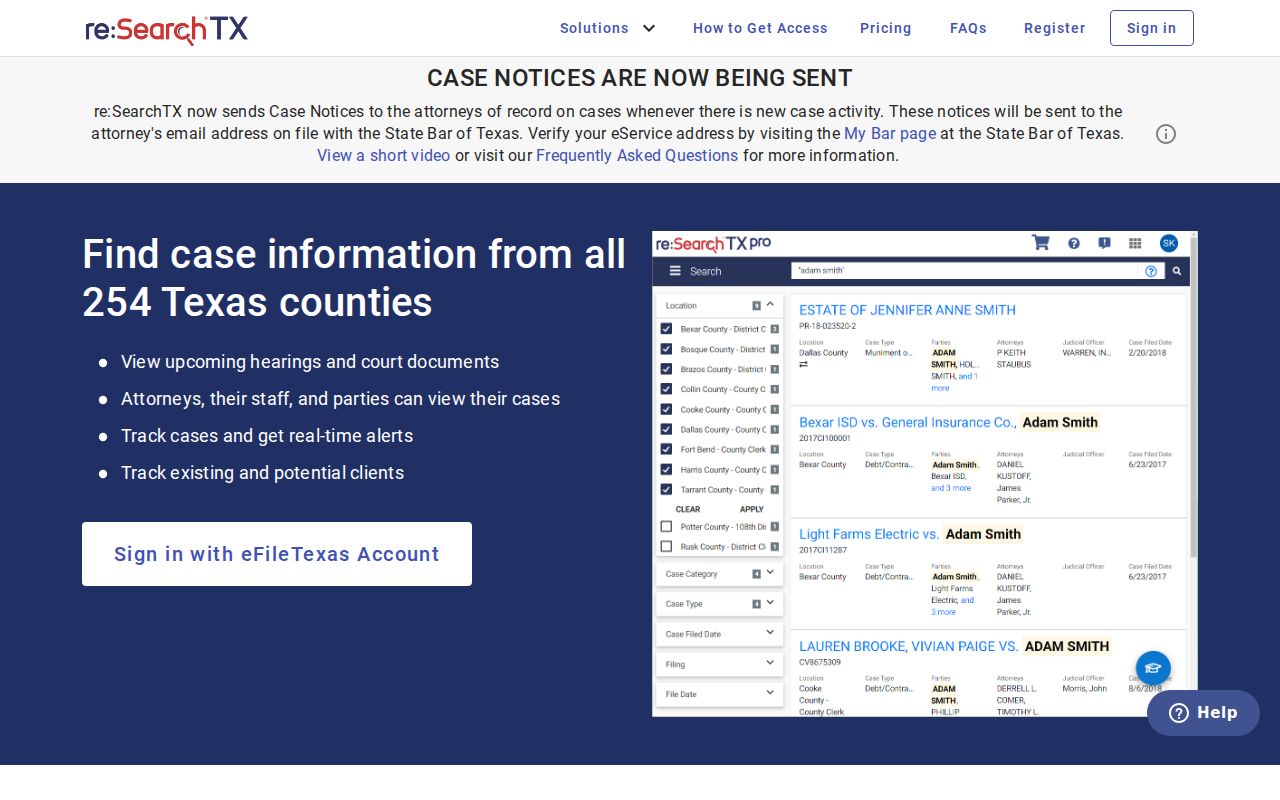
The statewide screen can help locate electronic court material, yet the Coleman clerk still controls the local file and certified copy.
| Field or control | Type | Required | Notes |
|---|---|---|---|
| County | Dropdown or navigation | Yes | Choose Coleman |
| Record or court category | Tab or dropdown | Yes | Choices vary by county and session |
| Party name | Text | Optional alternative | Follow the displayed last and first name format |
| Case number | Text | Optional alternative | Best unique search key |
| Date range | Date fields | Optional | Coleman publishes no coverage guarantee |
| Search or Reset | Buttons | No | Exact labels may change after county selection |
42nd District Court Felony Records
The Coleman District Clerk is the local custodian even though the 42nd Judicial District spans Brown and Coleman counties. Felony files are in Suite 201 at the Coleman County Courthouse, 100 W. Liveoak Street, Coleman, Texas 76834. Call 325-625-2568 or email dclerk@co.coleman.tx.us. Hours are Monday through Thursday from 8:00 a.m. to 4:30 p.m. and Friday from 8:00 a.m. to 4:00 p.m., with a noon to 1:00 p.m. closure.
The District Clerk's official page provides the felony search route and current office details.

For a useful reply, give the defendant name, approximate filing year, and cause number if known. Ask whether the file is online, on paper, or stored off site, and state whether a plain or certified copy is needed.
District Clerk
100 W. Liveoak Street, Suite 201
Coleman, TX 76834
325-625-2568
dclerk@co.coleman.tx.us
County Clerk
100 W. Live Oak Street, Suite 105
Coleman, TX 76834
325-625-2889
First-floor west-side entrance
Coleman Case Portal Limits
The Texas Online Records landing page supports county selection, but its session-based Coleman criminal index did not publish a stable coverage range or full document inventory. Search results can therefore be useful without being complete. The official county-selected portal shows the access point rather than a guarantee of every case or free PDF.
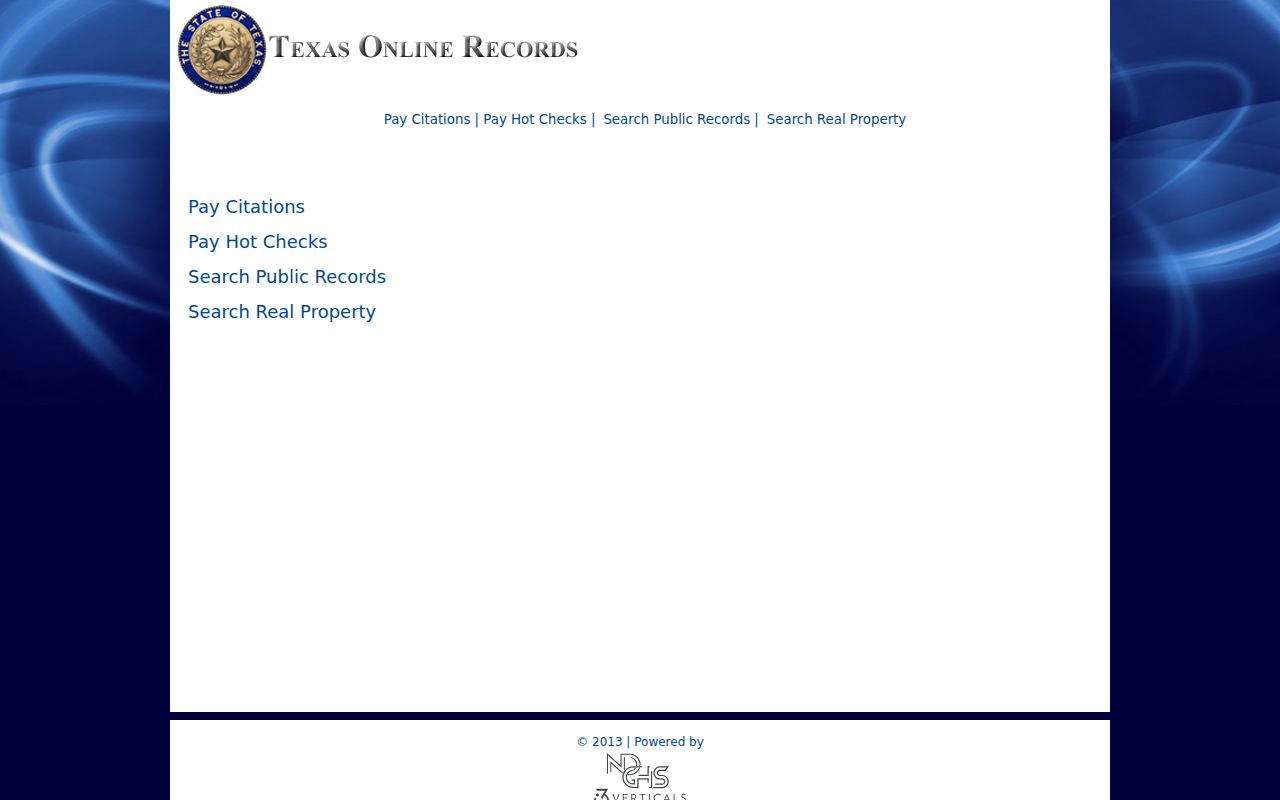
If the expected cause is missing, check the spelling, year, and court. Then call the correct clerk. Older files may be unscanned or stored off site, and sealed or confidential matters will not appear in a public result. A recent charge may also be waiting for prosecutor filing. Do not assume that an empty portal result means no Coleman County court record exists.
Note: Ask the clerk about index coverage and copy charges because Coleman County does not publish a complete criminal-file date range or fee list.
Inside a Coleman County Case File
A Coleman County case file records the charge as filed, not just the allegation entered at booking. It can identify the court, cause number, filing date, case type, parties, attorneys, charge description, status, and event history. The file may also hold a complaint, information or indictment, motions, settings, plea papers, judgment, and sentencing order. Document access and redaction depend on the file and clerk session.
| Cause number and court | The unique local case key and the court with jurisdiction |
|---|---|
| Charging document | The complaint, information, or indictment stating the filed accusation |
| Docket events | Filed papers, appearances, motions, settings, pleas, trial events, and later action |
| Case status | Whether the cause is open, disposed, dismissed, or subject to further proceedings |
| Disposition and judgment | The court's outcome, which may follow a plea, verdict, dismissal, or acquittal |
| Sentence and supervision | Confinement, fine, community supervision, or other terms entered by the court |
Protected identifiers, financial account data, some victim information, and confidential case types are not public. Payment balances may sit in a separate system. A posted hearing date is only a calendar entry, not the full history or final judgment.
Coleman Cause Numbers, Dockets, and Judgments
Three parts of a Coleman County court record answer different questions. The cause number identifies the case. The docket lists events in date order. The judgment states the court's result. Reading only one can lead to the wrong conclusion, especially when an arrest charge was reduced, enhanced, replaced, or rejected before filing.
- Dismissed
- The filed charge ended without a conviction in that cause. It does not mean the record was expunged.
- Deferred adjudication
- The court deferred a finding of guilt while conditions were served. Texas may still release it through the DPS public product.
- No bill
- A grand jury did not indict the charge presented to it.
- Acquitted
- A judge or jury returned a not-guilty result.
- Capias
- A court order directing that a person be taken into custody in connection with the cause.
For proof of outcome, ask for a certified judgment or dismissal order. A docket entry is helpful, but the signed order is the stronger record for correcting one's own DPS history or documenting the final result.
How a Criminal Case Moves
A custodial case begins with arrest and Article 15.17 magistration. The prosecutor then decides what charge to file. A felony complaint may proceed to grand-jury indictment, while a misdemeanor may be filed by complaint or information. Arraignment places the charge before the defendant. Pretrial settings and motions follow, then a plea or trial, disposition, and sentence. An appeal or a later motion to revoke or adjudicate can add new docket events.
Case flow: Charges Filed → Arraignment → Pretrial → Plea or Trial → Disposition → Sentencing
The official Coleman County Court docket page publishes current misdemeanor settings, generally on the third or fourth Thursday, subject to change.

The calendar helps confirm a setting, but it is not a historical case search and does not replace the clerk's docket sheet.
Coleman Criminal Case: Magistration to Indictment
The countywide Justice Court handles the first judicial stage after a custodial arrest. Article 15.17 requires appearance before a magistrate without needless delay, generally no later than 48 hours after arrest. The magistrate advises the accused of rights and sets bail. That record does not decide guilt, and it may exist before a District Court cause number is assigned.
For a felony, the 35th Judicial District Attorney reviews the case and presents an accusation for filing or grand-jury action. Once an indictment is filed, the District Clerk docket becomes the main public court chronology. Keep the stages distinct: a jail booking, a Justice Court magistration entry, prosecutor discovery, and a District Court case file are separate records held by separate offices.
Certified Coleman Dispositions for Correcting DPS
A person reviewing their own Texas history may find that a Coleman County disposition is missing or wrong in the DPS cycle. First obtain the fingerprint-based personal record from the Texas Department of Public Safety. Match the arrest event to the correct Coleman cause, then ask the District Clerk or County Clerk for a certified judgment, dismissal, or other final order.
The clerk proves what the court entered but does not directly edit the statewide Computerized Criminal History system. Send the certified disposition through the DPS correction channel with the arrest and case identifiers. If the local record was dismissed, remember that dismissal alone is not expunction. Texas expunction under Code of Criminal Procedure Chapter 55A and an order of nondisclosure are separate remedies with their own eligibility rules.
Case Record Access & Restrictions
Texas court files are not routed through the Texas Public Information Act in the same way as executive-agency records. Coleman County directs judicial record requests to the clerk or judge under judicial-access rules, constitutional law, and common law. That means a written TPIA request to the Sheriff's Office is not the right route for an indictment or judgment. Send the court request to the file custodian instead.
Access remains available through several routes: search the county-linked portal, try re:SearchTX, call or email the correct clerk, visit the counter, or mail a precise request for named documents. Ask about a paper archive when a case is too old for the index. Request certification when the copy must prove a result. Coleman County publishes no complete criminal-copy fee schedule, so confirm the charge and delivery method before ordering.
Note: A public docket is a court chronology, while the public DPS name search is a narrower statewide conviction and deferred-adjudication product.