
Checking Criminal History in Coleman County
Start by deciding which slice of a Coleman County criminal record answers the question. The county-linked Texas Online Records interface can help locate a filed court case. Yet the proper clerk still depends on the charge level. The District Clerk holds felony files for the 42nd District Court. The County Clerk keeps Class A and B misdemeanor cases, while the county Justice Court and a city municipal court handle distinct Class C matters. Current jail custody belongs to the sheriff, not either clerk.
Gather a full legal name, date of birth, spelling variants, an approximate date, and any cause, incident, or booking number. These details reduce a same-name error. Coleman County offices also divide work by elected custodian, so the record type matters as much as the name.
- Identify whether the need concerns custody, an agency report, a filed court case, or a statewide history.
- Use the county-linked court portal or current inmate list for an initial lead, then note the court, cause number, or booking details shown.
- Contact the District Clerk for felonies, County Clerk for Class A or B cases, and the correct Justice or Municipal Court for Class C cases.
- Ask the sheriff or arresting agency for its own report or booking sheet. A court clerk does not hold the police narrative.
- For self-review, compare certified local dispositions against a fingerprint-based Texas DPS personal record.
The Coleman County homepage illustrates the courthouse and its record-routing notice.

That routing warning is vital because a request sent to the wrong Coleman County office need not be forwarded.
| Texas Online Records control | Use | Coverage note |
|---|---|---|
| County | Select Coleman | Required before choosing an available collection. |
| Record or court category | Choose the relevant module | Available categories vary by county. |
| Party name | Name-based search | Follow the name format shown in the module. |
| Case number | Unique-key search | Preferred when the cause number is known. |
| Date range | Optional narrowing field | Coleman County does not publish a coverage guarantee. |
One Coleman Arrest, Four Different Record Custodians
A single Coleman County arrest can yield four related products. The arresting agency writes the incident or arrest report. The Law Enforcement Center creates the booking and custody entry. A prosecutor may then file a charge with the correct clerk. DPS receives reportable fingerprint, charge, and disposition events for the state CCH system.
The record flow is: Agency report → county booking → prosecutor and court filing → DPS criminal-history cycle. A Coleman Police report remains a city record even when the person is held in the county jail. Likewise, a booking charge may change after prosecutor review. The filed charge and final judgment are found in the case file.
| Record | Coleman County source | Best identifying detail |
|---|---|---|
| Incident or arrest report | Arresting agency | Report number and event date |
| Booking or custody entry | Law Enforcement Center | Booked name and booking date |
| Filed criminal case | Correct court clerk | Cause number and court |
| State criminal history | Texas DPS | Name data or fingerprints |
For deeper treatment of custody and agency records, use the Coleman County arrest lookup. Filed charges, docket events, and judgments belong in the criminal court case file.
Texas Official Background Checks
The Texas Department of Public Safety Crime Records Division manages the Computerized Criminal History system. Its public name product releases conviction and deferred-adjudication information that Texas law permits DPS to disclose. It is not a full rap sheet, and a same-name match does not prove identity. Registered users need search credits, and the current credit price should be checked in the live purchase screen.
Someone reviewing their own record can instead follow the DPS personal-review process and submit fingerprints through Texas FAST, provided by IdentoGO. The requesting Texas agency supplies the right service code. Coleman County research did not verify a permanent enrollment center in the county, so the live locator should determine the current appointment site.
| DPS search field | Input | Use |
|---|---|---|
| Last and first name | Required text | Use the legal spelling. |
| Middle name | Optional text | Helps narrow common names. |
| Date of birth | Required date | Enter in the format shown. |
| Sex and race | Selections as presented | Additional identity discriminators. |
| Search or Clear | Buttons | An account and credits are required before searching. |
The DPS conviction-search information page shows the scope and account requirements for this Texas criminal-record product.
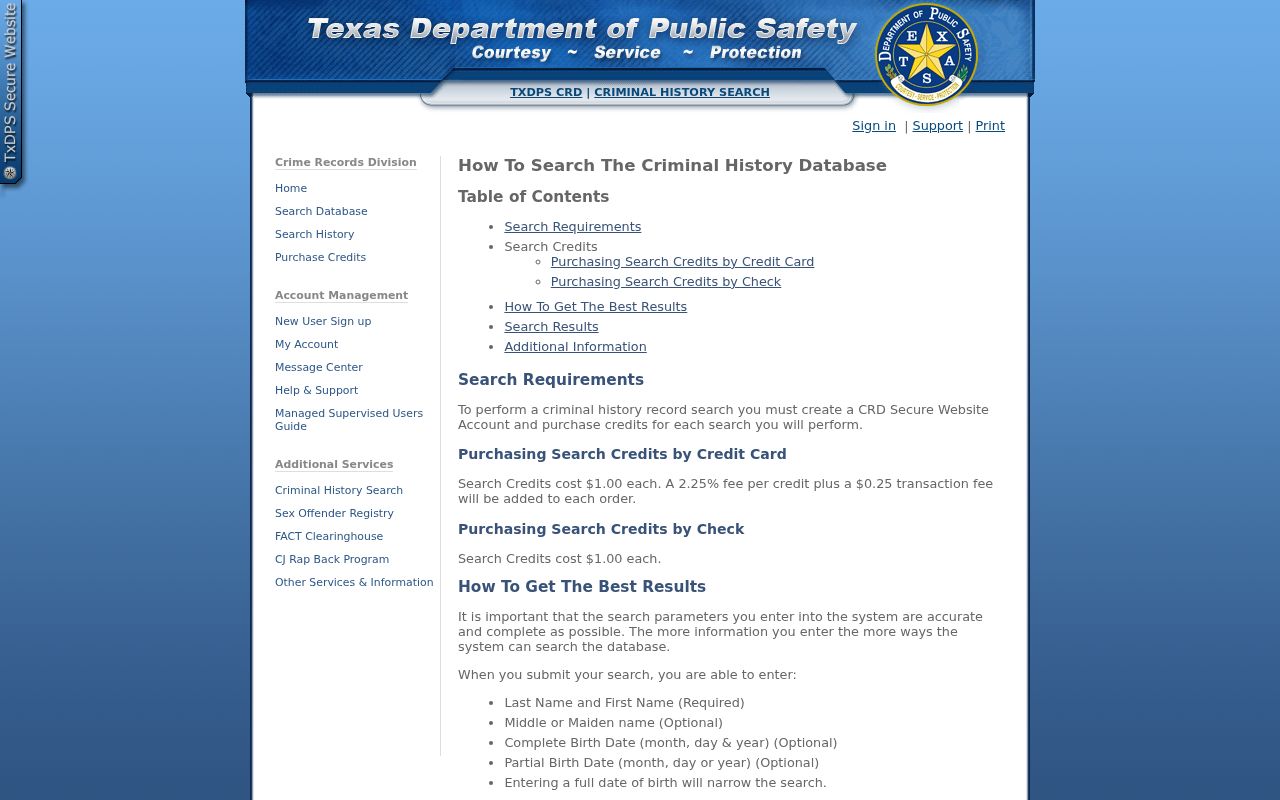
Its scope notice explains why a local Coleman County court file may contain details that the public state result does not display.
Fix a Missing Coleman DPS Disposition
A DPS entry can lag or remain incomplete when identifiers, fingerprints, or later case events do not link as expected. Begin with your fingerprint-based DPS record. Mark the arrest cycle that lacks the final outcome, then ask the correct Coleman County clerk for a certified dismissal, judgment, acquittal, or other disposition. The clerk proves what the court entered, but it does not edit the DPS system itself.
Use the DPS error-resolution channel with that local proof and the arresting agency details. The account screen is separate from the correction process, but it shows why a registered public name search has different identity limits.
The official DPS secure account form identifies the registration gateway used before a public credit search.
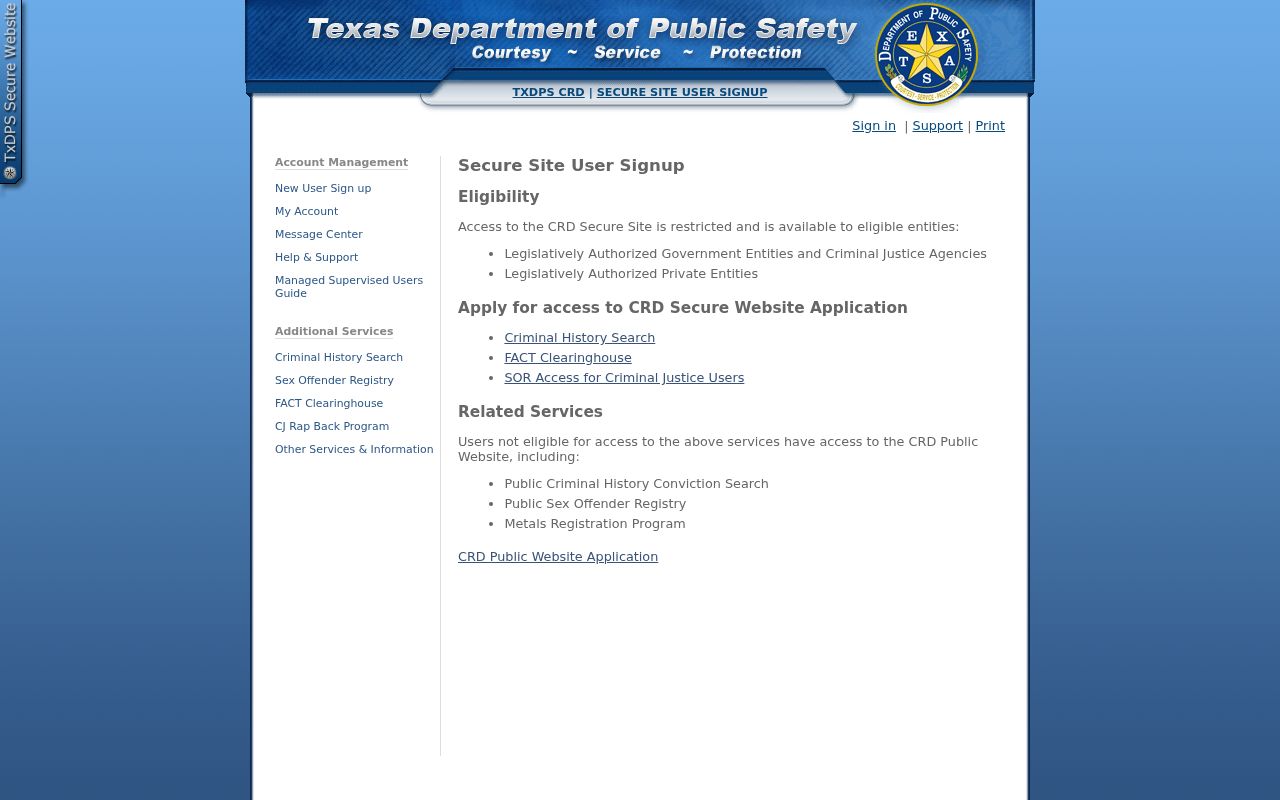
Account access does not turn the public name product into an identity-confirmed personal review or a complete Coleman County case file.
Review Your Own Coleman County Record
Use DPS personal-review instructions when identity accuracy matters. Fingerprints can distinguish your record from one tied to a similar name. Compare each Coleman County arrest cycle with the local case, then obtain a certified disposition for an incomplete state entry.
For the identity-based route, the FAST fingerprint enrollment entry begins with the service code supplied for the authorized Texas process.
Fingerprints help tie a self-review to one person instead of relying only on a name and date of birth.
Criminal Record Types
Coleman County criminal records begin at different points in the justice process. An offense report records an agency's account of an event. An arrest report describes the officer's grounds and arrest circumstances. The jail adds intake, charge, bond, and custody data. The countywide magistrate records warnings and bail action, while prosecutors and clerks create later filing and docket records.
Warrants, supervision records, and registry profiles have their own custodians. Coleman County publishes no public active-warrant database, so a search must use the sheriff, issuing court, and case docket as appropriate. Probation is handled through the 35th Judicial District CSCD. Parole rests with state agencies. The Texas Public Sex Offender Registry is a distinct public-safety database, not a complete criminal history.
- Booking record
- The jail intake file showing custody, initial charges, and bond-related fields.
- Disposition
- The court's outcome for a filed charge, such as dismissal, acquittal, or conviction.
- Deferred adjudication
- A Texas outcome that postpones a finding of guilt while conditions are completed; it can still appear in the DPS public product.
- Capias
- A court order directing that a person be taken into custody, often linked to a filed case or failure to appear.
Note: A current custody list answers who is held now, not everyone previously booked into Coleman County jail.
Coleman Probation and Parole Records
Probation and parole are separate Coleman County criminal record routes. The 35th Judicial District CSCD handles local community supervision under court oversight. A clerk's public judgment can show that supervision was ordered, and a filed motion to revoke or adjudicate can appear on the court docket. Operational case notes, testing, treatment, and officer-safety details are not a public online case file.
Parole is a state process. The Texas Board of Pardons and Paroles makes release decisions, while TDCJ supervises people released on parole. Start with the Coleman County judgment, use the TDCJ inmate result for available eligibility or release fields, and then use the Board's status route. A local clerk cannot certify a state parole decision, and the CSCD should not be treated as the parole office.
Coleman County Law Enforcement Center Records
The Coleman County Law Enforcement Center at 965 North U.S. 283 is the sheriff, jail, booking, and inmate-information site. It is not the courthouse clerk counter. Staff receive people arrested by the sheriff and other agencies, confirm the authority to hold them, inventory property, conduct intake screening, take fingerprints and photographs, enter charges or holds, and track release or transfer.
Coleman County links an Online Inmate Custody List for current custody. It may show a name, custody or booking entry, arresting agency, charge text, bond fields, and status, depending on the vendor view. If no match appears, call 325-625-3506. A quick release, transfer, spelling issue, or update lag can explain the result. People sentenced to state prison instead appear through TDCJ, while VINELink may support custody notifications.
The Coleman County Sheriff page supplies the Law Enforcement Center contact and links to the live inmate and visitation resources.

This official route keeps booking questions at the jail while filed criminal cases remain with the courthouse clerks.
Inside a Coleman County Criminal Record
A Texas CCH cycle can contain names and aliases, descriptors, a state identification number, arrest date and agency, offense codes, tracking control number, prosecutor action, court cause number, disposition, sentence, and supervision updates. Public DPS results exclude confidential criminal-history information and must be described as the authorized conviction and deferred-adjudication subset.
A local Coleman County case index may expose a cause number, court, party name, filing date, case type, charge, docket dates, status, and disposition. Access to motions, charging papers, judgments, or sentencing orders depends on the clerk, document status, and any lawful restriction.
| Name and identifiers | Displayed name, aliases, birth data, and system identifiers as law permits. |
|---|---|
| Arrest and booking data | Agency, date, tracking or booking number, intake charge, bond, and custody fields. |
| Filed charge | The offense accepted by the prosecutor and entered under a court cause number. |
| Disposition | The outcome for that filed charge, which may differ from the arrest allegation. |
| Sentence or supervision | Confinement, fine, probation, deferred conditions, or later revocation events when public. |
Pick the Right Coleman Court Counter
Charge level directs the Coleman County records search. Felonies go to the District Clerk in Suite 201 for the 42nd District Court. Class A and B misdemeanors go to the County Clerk in Suite 105 and the constitutional County Court. Fine-only Class C matters may belong to Coleman Municipal Court when filed by city police, or to the countywide Justice Court when filed by the sheriff, DPS, or game wardens.
The difference affects both the record location and the meaning of online tools. A posted docket is a hearing calendar, not a full name search. A payment screen may produce a plea consequence and is not a neutral case index. Use a cause number when known, ask for a docket sheet and named documents, and specify whether a plain or certified copy is needed.
Note: The Coleman Justice Court phone has no voicemail, so use its published email and signed-form process when the office cannot answer.
Public Access Laws in Texas
The Texas Public Information Act governs executive-branch records such as sheriff and police material, subject to exceptions and redaction. It does not route judicial case files in the same way. Coleman County directs court-record requests to the clerk or judge. A request should therefore separate the agency narrative from the filed complaint, judgment, or docket.
Texas law calls for prompt production within a reasonable time. The well-known ten-business-day period concerns an agency seeking an Attorney General ruling to withhold information; it is not a universal delivery deadline. Active-investigation material, motor-vehicle data, confidential criminal history, and juvenile information can receive protection.
Key statutes:
Government Code §552.021 sets the public-information availability baseline.
Government Code §§411.083 and 411.135 protect criminal-history information while authorizing the DPS public conviction and deferred-data product.
Family Code §58.008 protects juvenile justice information.
Code of Criminal Procedure Chapter 55A governs Texas expunction.
Coleman Police and Incident Records
An incident narrative belongs to the agency that wrote it. Request a Coleman Police report through the city's official contact route, and ask the sheriff for an unincorporated-area report. A DPS trooper or game warden report stays with that state agency even when the person was booked in Coleman County. Give the report number, date, time, location, involved party, and exact part wanted, such as the offense report, CAD record, or available video.
Police records can be redacted for active investigations, juveniles, protected victims, motor-vehicle data, or other confidential details. A booking sheet and a court case are different products. For a crash, TxDOT CRIS may hold the report, while the arresting agency and court maintain any related criminal records. Ask each custodian only for the record it created.
Coleman County Misdirected Records Requests
Coleman County warns that each elected official serves as public-information administrator for that office. No department controls another office's records. A request that merely reaches the county homepage or the wrong counter may not move to the right custodian. This local rule turns a broad request for a “criminal record” into a poor search method.
Name the item and send it to its holder. Direct a sheriff incident report, booking sheet, jail record, or sheriff warrant question to the Law Enforcement Center. Send a city police report to the city. Ask the District or County Clerk for a filed case and judgment. If the record is judicial, do not rely on the ordinary TPIA route.
Sealed, Expunged, and Restricted Records
Texas restricts juvenile law-enforcement records, expunged files, records covered by an order of nondisclosure, protected victim information, Social Security and financial data, driver's-license data, and criminal-history information outside a requester's lawful access. A missing online result can also reflect an older paper file or a portal coverage gap, so absence alone does not prove a record was cleared.
Expunction under Code of Criminal Procedure Chapter 55A is the stronger remedy. It directs qualifying government records to be removed, destroyed, or returned as the order requires. Eligibility may rest on an acquittal, pardon, no-bill, identity theft, or a qualifying arrest or dismissal with the required conditions. A dismissal by itself is not an expunction.
An order of nondisclosure limits ordinary public release but preserves access for criminal-justice agencies and other entities named by law. For a Coleman County filing, first identify whether the underlying matter was a District Court felony or County Court misdemeanor. Ask that clerk for the current filing fee, service steps, local format, and certified-copy cost. The research found no official county petition packet or published Coleman filing fee.
Coleman Magistration Records in 48 Hours
The countywide Justice of the Peace serves as Coleman County's lead magistrate. After a custodial arrest, Article 15.17 requires an appearance without needless delay, generally within 48 hours. The magistrate explains rights, addresses probable cause, and sets bail where authorized. The resulting record can document warnings, bond action, and the first court step, but it is not the final criminal case disposition.
The same Justice Court issues several kinds of warrants and hears Class C cases filed by the sheriff, DPS, and game wardens. A bench warrant or capias can also arise from a pending case, while a capias pro fine relates to enforcing a final fine and cost judgment. Coleman County has no public active-warrant database, so anyone addressing their own warrant should contact the issuing court or counsel and seek written confirmation after judicial action.
The official Coleman Justice Court page sets out its magistration, warrant, hearing, and citation roles.

Its breadth helps explain why the first custody record, a Class C file, and a later felony case may sit in different places.
County Court Thursdays: Reading Coleman’s Misdemeanor Calendar
Coleman County Court misdemeanor sessions are generally set on the third or fourth Thursday at 9:00 a.m., but the live schedule controls. The 2026 calendar is an active docket-management tool, not proof that every misdemeanor case appears online. A gap between filing and a setting may reflect the monthly schedule. It does not establish a backlog or case outcome.
The County Clerk keeps the Class A and B misdemeanor file. Search by name or cause number where the portal selected by Coleman County permits, then ask for the docket sheet, charging instrument, judgment, and sentence as separate items. The District Attorney handles felonies, while the County Attorney prosecutes these misdemeanors.
A traffic crash may also create a separate source trail. The TxDOT CRIS purchase system is the official route for a qualifying crash report.
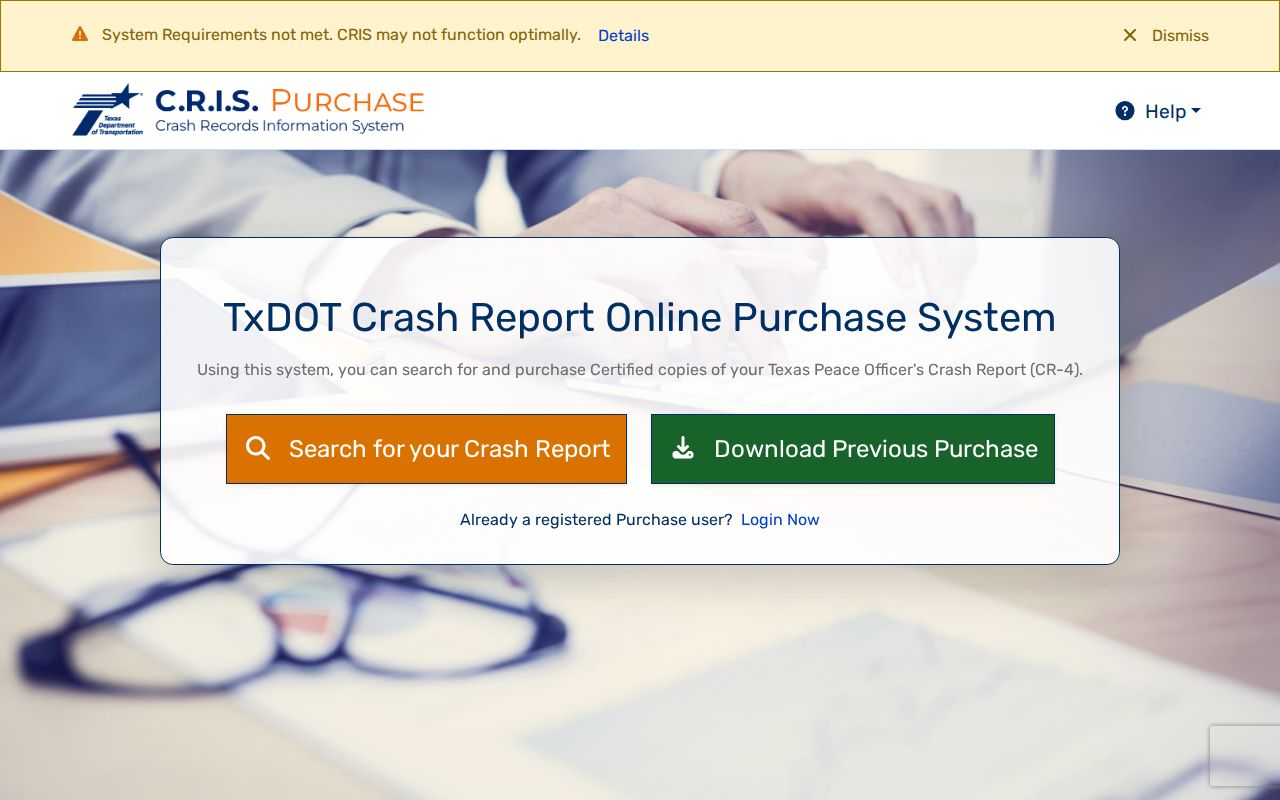
A crash report does not replace a Coleman County booking entry or any criminal court case that followed the event.
Coleman County Criminal Records by City
Coleman County has three incorporated cities: Coleman, Santa Anna, and Novice. City police or municipal courts can create local records, while the county jail and county-level courts maintain their own parts of the same event. Coleman has a police department and municipal court. Santa Anna records should begin with its current city custodian. Novice has no verified police or municipal portal, so sheriff, Justice Court, and state channels form its practical route.
Coleman Criminal Records
Population 3,912 · City police reports and municipal Class C files remain city-held.
Santa Anna Criminal Records
Population 1,014 · Confirm the current city records and court contacts before requesting.
Novice Criminal Records
Population 122 · County and state offices supply the verified criminal-record channels.
These counts come from the 2020 Census place ranking used consistently across all three Coleman County city profiles.
Coleman County’s 1,263-Square-Mile Records Geography
Coleman County covered 1,262.91 land square miles and had 7,684 residents in the 2020 Census. The Census Bureau estimated 7,915 residents in 2025. That low-density geography helps explain why county justice offices serve many small communities from the county seat.
Coleman County's compact courthouse group holds court files, while the sheriff and jail sit at the highway Law Enforcement Center. Federal cases are separate again. Coleman County lies in the Northern District of Texas, and federal dockets use PACER rather than a county clerk portal.
The official PACER portal supplies access to federal court records subject to account and fee rules.
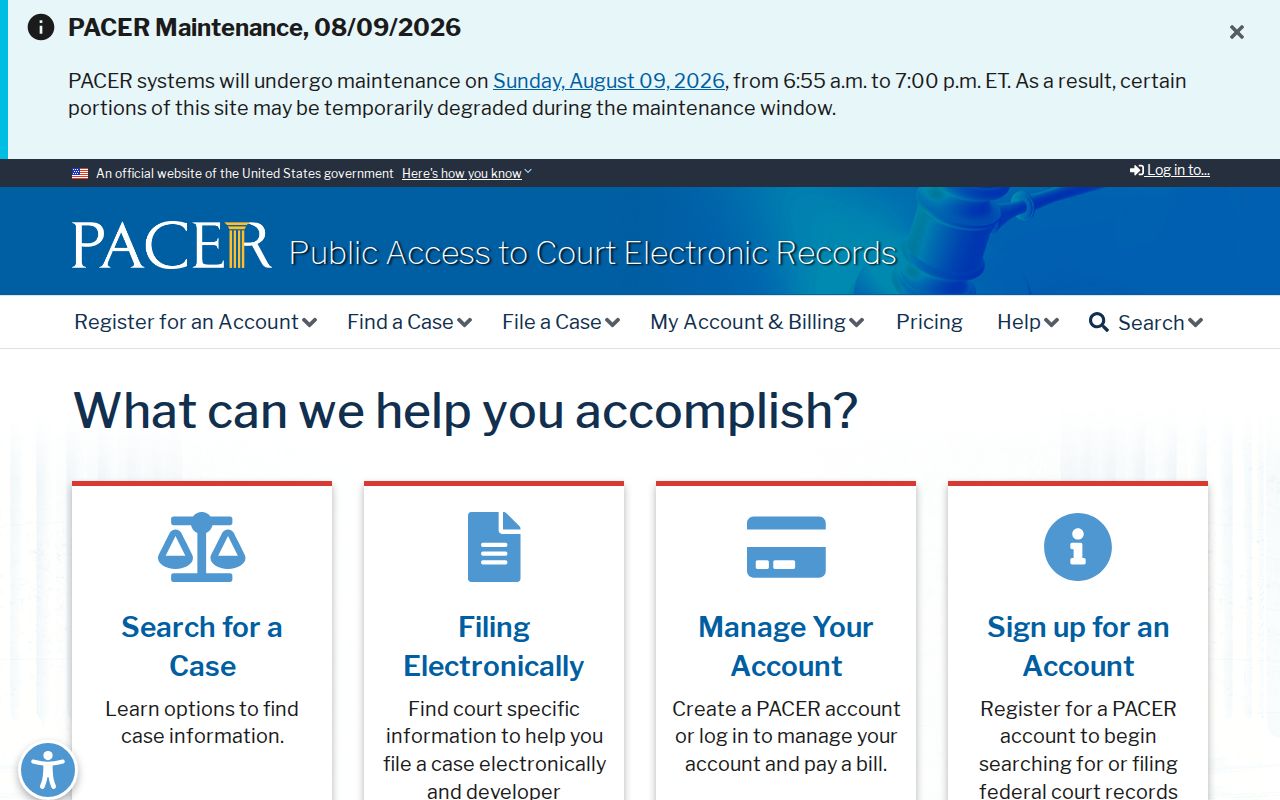
That federal layer should not be confused with Coleman County court cases, the county jail list, or the Texas DPS history product.