
Coleman County Arrest History
Coleman County arrest history begins with the agency that took action. The Coleman County Sheriff handles county and unincorporated-area incidents and is also the booking custodian. Coleman Police keeps its city incident and arrest reports. Santa Anna city law enforcement retains reports it creates. Texas DPS Highway Patrol, Texas Parks and Wildlife game wardens, and the county constable each keep their own agency reports, even when the person enters the same Coleman County jail.
The booking record is separate. It documents intake, charges or holds, identification, bond action, and release or transfer. A prosecutor may later reject, replace, reduce, or enhance the booking charge. The clerk opens a case only when a charge is filed. The incident report, booking sheet, magistrate action, court case, and DPS event can describe one Coleman County arrest without being the same record.
Coleman Custody List Is No Archive
The Sheriff links an Online Inmate Custody List for current county custody. It answers a narrow question: is a person shown in local custody now? The vendor view may expose a name, booking entry, time, agency, charge, bond, or status. Coleman County does not promise that every field appears.
A missing name does not rule out an arrest. Release, transfer, spelling, or vendor lag may explain it. The list is not a historical blotter, and no separate official daily arrest archive was located. Call the Coleman County jail for current status, then request an older booking sheet in writing.
Note: The county roster reflects current custody, while an older Coleman County booking record can remain with the Sheriff after release.
Looking Up Coleman County Arrests
Start with the source closest to the event. Use a full legal name, date of birth when lawful, date range, place, incident number, booking number, and arresting agency when known. Coleman County publishes no single portal that combines all arrest reports, old bookings, warrants, court filings, and statewide history.
- Check the county-linked custody list for a person who may still be at the Coleman County Law Enforcement Center. If no match appears, call the jail at 325-625-3506.
- Identify the arresting agency and ask that office for its arrest or offense report. Contact Coleman Police at 325-625-4114 for city reports, or use the state open-records route for a DPS or game-warden report.
- Ask the Sheriff for the booking sheet, charge and hold fields, bond entry, release or transfer status, and available magistration data. A precise written request works better than asking for a broad “criminal record.”
- Follow a filed charge to the correct clerk: District Clerk for felonies, County Clerk for Class A or B misdemeanors, and Justice or municipal court for Class C matters. The Coleman County criminal court case file can show what prosecutors filed after booking.
- For review of your own statewide history, use the Texas DPS fingerprint-based personal-review process. Compare that result with local arrest and certified disposition records when a cycle appears missing or wrong.
The public DPS conviction name search is not a substitute for these steps. Its lawful public scope covers conviction and deferred-adjudication information authorized for release, not every recent or non-conviction arrest. A same-name result also does not prove identity.
Coleman County Booking on U.S. 283
The Coleman County Law Enforcement Center is physically separate from the courthouse. It is the place for Sheriff reports, jail custody data, and booking records. The courthouse clerks hold filed cases, not the jail intake file. This highway-to-courthouse split explains why a request sent to the wrong building may yield no record even when the event occurred.
During booking, staff confirm authority to hold, inventory property, screen the intake, take fingerprints and a photograph, enter charges and holds, and prepare for magistration. Coleman County publishes no sheriff copy fee, named records manager, or dedicated request portal. Call before visiting about lobby access, identification, delivery, and lawful charges.
Coleman County Law Enforcement Center
965 North U.S. 283
Coleman, TX 76834
325-625-3506
Fax: 325-625-3509
Custodian route for Sheriff arrest reports, booking sheets, jail custody files, and precise written public-information requests.
Inside a Coleman County Arrest Record
Field content depends on which record is requested. An agency report can include the incident number, event time and place, alleged offense, arrest basis, officer or unit, property, evidence, and a probable-cause narrative. The jail adds its own intake fields. Protected victim, juvenile, medical, motor-vehicle, and personal data may be withheld or redacted under Texas law.
| Booking identifier | Connects the jail intake to the correct custody event; availability and format depend on the Sheriff’s record. |
|---|---|
| Date and time | Shows when jail intake occurred, which may differ from the time of the street arrest. |
| Arresting agency | Points to the office that holds the arrest or offense report and its supporting narrative. |
| Booking charges | Lists allegations or holds entered at intake, not a final court finding or guaranteed filed charge. |
| Bond or bail | May show amount, type, or restriction set by lawful order; it is not a disposition. |
| Release or transfer | Records local release, continued custody, or movement to another authority when available. |
| Photograph access | Texas release limits and protected data apply. Request any releasable image from the custodian; none are republished here. |
Coleman Arrest Magistration Records
Magistration is the first court stage after a custodial arrest. Under Texas Code of Criminal Procedure Article 15.17, the person must be taken before a magistrate without needless delay, generally within 48 hours. The Coleman County Justice Court states that its judge serves as lead magistrate, gives the required warnings, and sets bail in felony and misdemeanor matters.
The magistrate record may address rights, probable cause, bail terms, and protective orders. It does not decide guilt. Bail may be cash, surety, personal recognizance, or restricted or denied when law allows. The jail records the practical outcome, while a Justice Court file may document the judicial act. Ask for both when a bond line on a roster lacks context.
Note: A Coleman County bond entry records release terms at one stage; it does not show how the criminal case ended.
Booking Logs and Recent Arrests
Coleman County’s current-custody list is the closest official source to a recent booking log. There is no located county daily PDF blotter, public arrest gallery, or verified sheriff mobile app. Readers should use the roster for present custody, the jail phone for a quick status check, and a written request for booking history. This three-part chain is more reliable than treating a live list as a permanent archive.
For notification rather than a static lookup, the official research also identifies VINELink as a Texas-supported custody-status channel. Its interface is shown below without displaying a private person’s record.
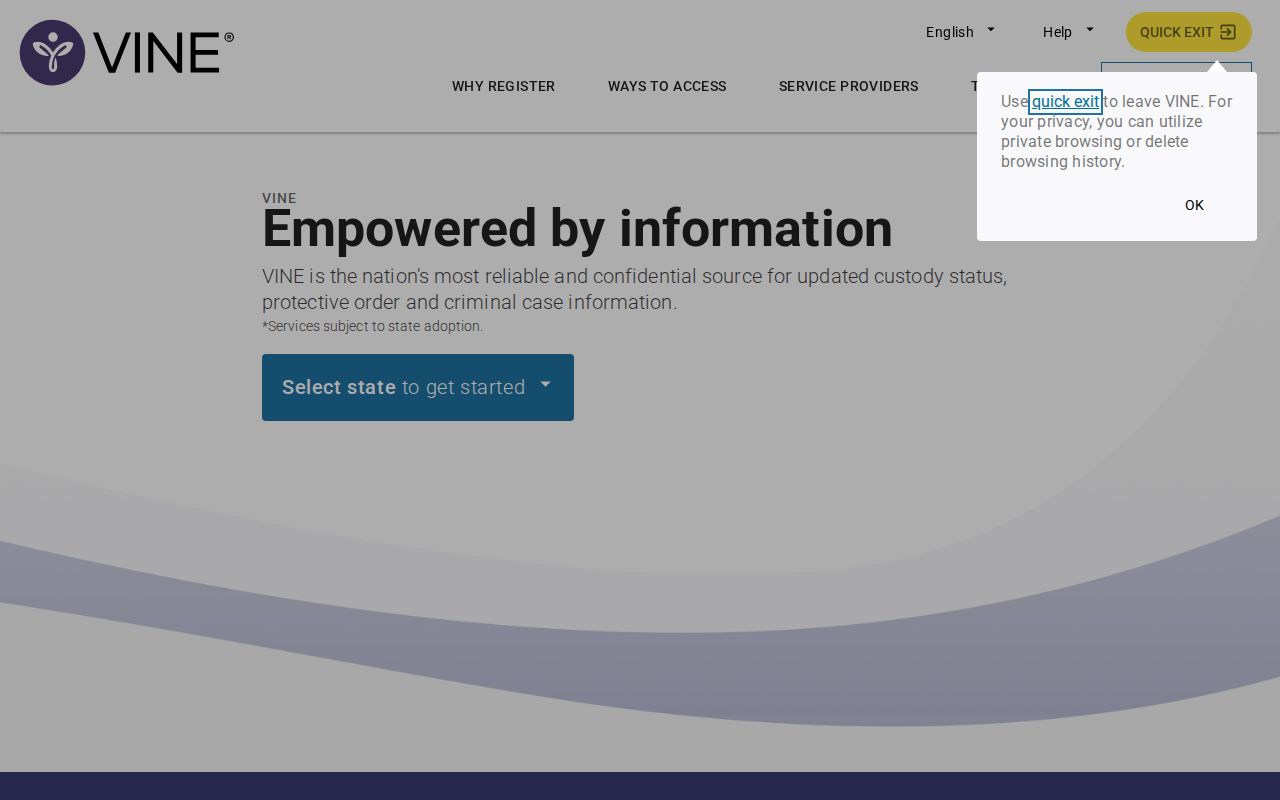
VINELink can supplement the Coleman County jail route when a participating custody event offers notice by phone, email, or text, but the originating agency remains the place to verify the record.
Coleman Police Reports Versus Booking Sheets
A Coleman Police arrest produces at least two local records. The city police report describes the officer’s grounds, event facts, place, time, and evidence. The county booking sheet documents what happened after transport to the Law Enforcement Center. A Santa Anna arrest follows the same custody split: the city-created report stays with its custodian while the county holds the jail record.
State arrests add another route. Request a highway patrol report through the Texas DPS public-information channel. Request a game-warden report through the TPWD open-records channel. If either arrest led to local booking, seek the booking sheet from Coleman County as a second request. The county’s own policy warns that elected offices do not have to forward a request sent to the wrong custodian.
Coleman Arrest Relief Options Compared
A dismissal does not by itself clear a Coleman County arrest cycle. Expunction under Texas Code of Criminal Procedure Chapter 55A is the stronger remedy. When a person qualifies and a court grants the petition, the order directs listed government custodians to remove, destroy, or return covered arrest records as the statute requires. Eligibility can depend on an acquittal, pardon, no-bill, identity theft, or a qualifying dismissal and waiting period.
An order of nondisclosure has a different effect. It limits ordinary public release for an eligible record while specified agencies may retain access. After either order, keep certified copies and check local indexes plus a DPS personal criminal-history review. If the Coleman County cycle remains, send the order and disposition proof to the actual custodian or DPS correction channel.
Released After a Coleman Arrest
Call the Law Enforcement Center with a full legal name and date of birth when the custody list no longer shows a match. Ask whether staff can confirm release or transfer and how to request the booking sheet. Then contact the arresting agency for its report and the proper court clerk for any filed case. Quick release may end the live roster entry, but it does not erase the underlying agency and jail records.
If the person moved to state prison after a sentence, use the TDCJ Online Inmate Search. The official state search fields are pictured below without opening a private record.
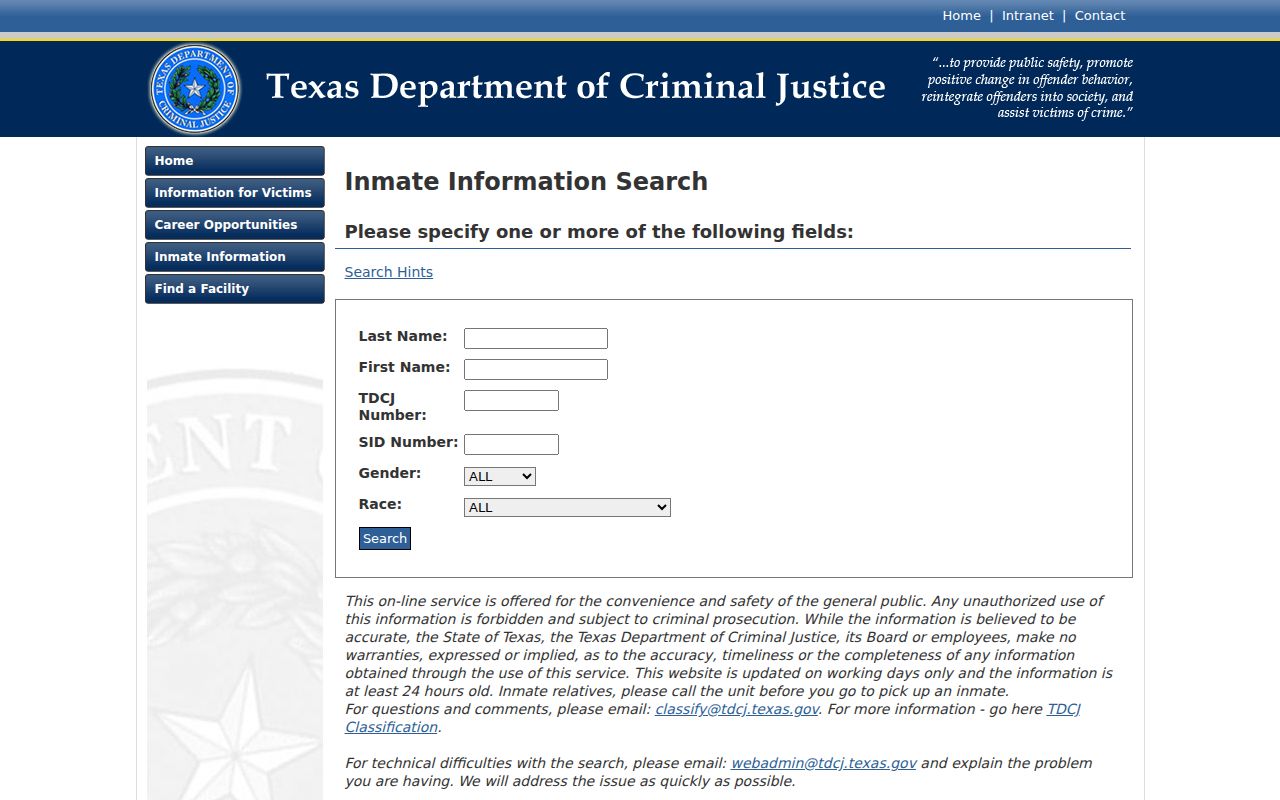
TDCJ results concern state custody and may show identifiers, unit, offense, sentence, projected release, or parole data. They do not replace the older Coleman County booking sheet or arresting-agency report.
Coleman Arrest Blotter Fallback Chain
When no online entry answers the question, send a focused written request to the office that holds the file. The Coleman County public-information form asks for contact details, a record description, inspection or copy preference, signature, and date. State law does not require special legal phrases. It does require enough detail for staff to identify the requested incident, arrest, or booking.
For Sheriff material, confirm whether fax 325-625-3509 accepts public-information submissions before sending it. Name the report type, event date and place, agency, incident or booking number, and exact parts wanted. The Texas Public Information Act calls for prompt production, meaning as soon as reasonably possible under the facts. It does not impose a universal ten-business-day delivery promise. Active-investigation information, juvenile records, confidential criminal history, and protected personal data may be withheld or redacted.
Arrests Are Not Convictions
An arrest shows that an agency took a person into custody or acted on an allegation. It does not establish guilt. Prosecutors may decline the charge, file a different offense, or proceed to a court result much later. Compare the Coleman County arrest source with the proper clerk file and, for your own record, the fingerprint-based DPS history.
| Point | Arrest record | Conviction record |
|---|---|---|
| Created by | Arresting agency and county jail | Court after plea, verdict, and judgment |
| What it establishes | An arrest or booking event occurred | The court entered a finding and disposition |
| Where to ask | Agency report custodian and Sheriff | District, County, Justice, or municipal clerk |
| Later change | Release, rejection, or different filed charge | Sentence, appeal, nondisclosure, or eligible expunction |
Dismissal alone does not erase a Coleman County arrest. Eligible people may need an expunction order under current Chapter 55A to direct government custodians to clear records. An order of nondisclosure mainly limits public release and does not mean the record was destroyed.
Note: A Coleman County arrest is an allegation, not proof of guilt, and the filed charge may differ from booking.